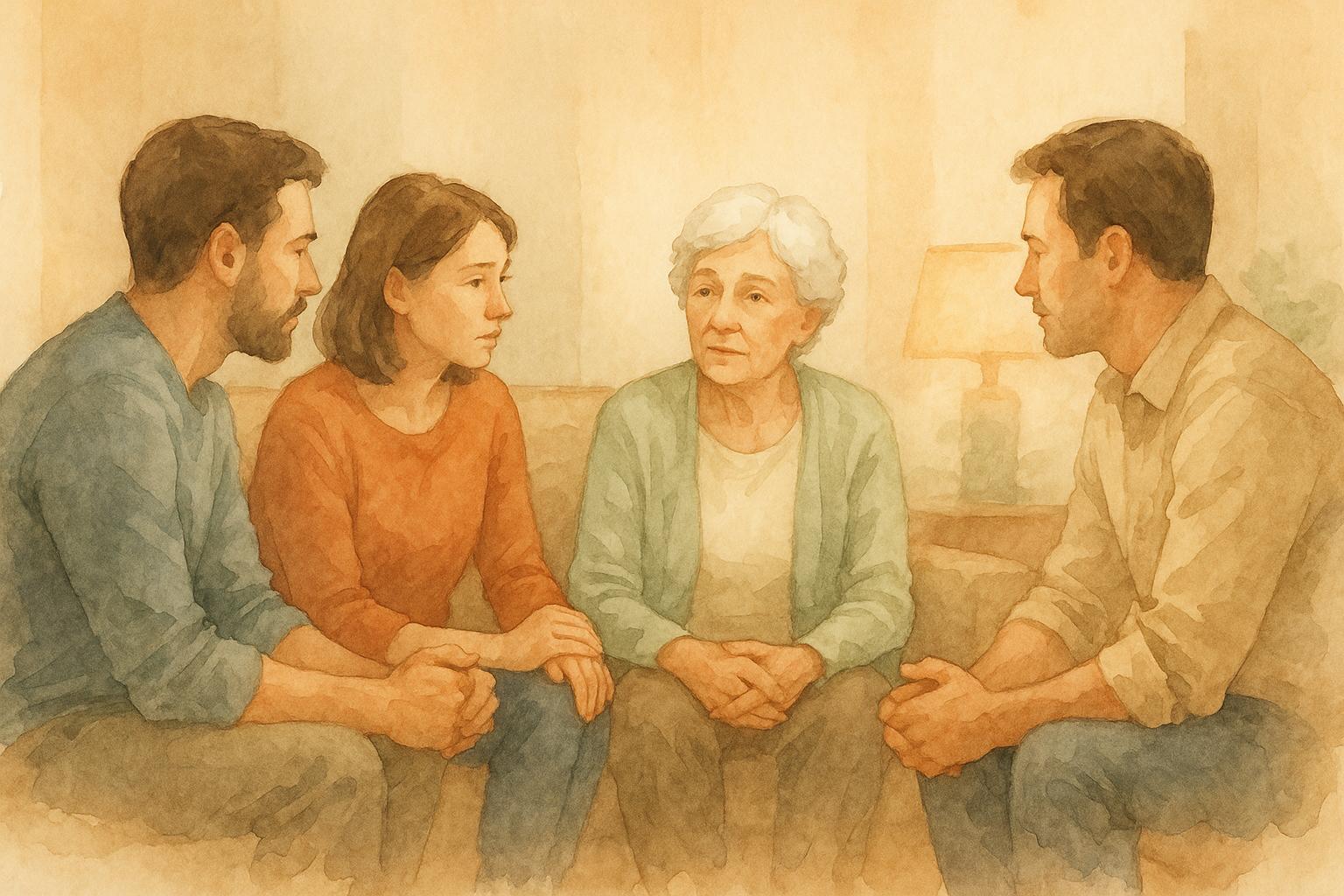
When a loved one can no longer make decisions, families often face tough choices about end-of-life care. These decisions include resuscitation, life support, pain management, and more. Without clear instructions like advance directives, families may struggle to balance personal feelings with honoring the patient’s wishes. Miscommunication, cultural differences, and family conflicts can complicate the process further.
Key takeaways:
- Advance directives provide clarity and reduce uncertainty.
- Families often act as decision-makers and advocates, ensuring care aligns with the patient’s values.
- Open communication with healthcare providers is critical to avoid misunderstandings.
- Cultural norms influence how families approach decision-making, with some favoring collective choices over individual autonomy.
- Mediation and ethics committees can help resolve disputes when disagreements arise.
Proactive planning, documented preferences, and family discussions can ease the emotional burden and ensure decisions respect the patient’s wishes.
Ethics and decision-making at end of life – 17 August 2023
Families as Decision-Makers and Patient Advocates
When patients are no longer able to make decisions for themselves, their families step into an incredibly challenging role. They become the voice for their loved one, tasked with making critical end-of-life care decisions. This responsibility often requires navigating a delicate balance between their own feelings and what the patient would have wanted. The goal is to honor the patient’s values and previously expressed wishes – not to impose personal preferences. However, this is easier said than done, especially when emotions are high and the decisions feel deeply personal. Let’s take a closer look at how families manage these responsibilities under such difficult circumstances.
Surrogate Decision-Making and Patient Autonomy
In cases where no advance directive exists, state laws typically determine who has the authority to make decisions. Generally, the spouse is first in line, followed by adult children, and then parents. Some states have specific laws that clearly outline this hierarchy, making it important for families to be familiar with their local regulations regarding surrogate decision-making.
Healthcare providers play a key role in guiding families through these decisions, ensuring that the patient’s autonomy is respected. This means helping families make choices that align with the patient’s expressed values – even when those choices differ from what the family might think is best.
Research highlights that families feel more supported and confident when there’s clear documentation of the patient’s wishes. When physicians provide recommendations that align with those wishes, families report greater satisfaction, as they’re reassured that their decisions reflect the patient’s true desires rather than guesswork or personal projections.
Beyond making decisions, families also take on the role of advocates for their loved one. They ensure the patient’s voice remains central in all discussions and decisions. Advocacy often includes participating in care planning, ensuring proper pain management, and pushing for palliative care when curative treatments are no longer effective. In fact, patients often rely on family members more than healthcare providers during these times, making the family’s role even more critical.
Advocacy actions can include:
- Requesting family meetings to discuss care options and preferences.
- Asking healthcare providers to document the patient’s wishes in their medical records.
- Seeking physician recommendations for appropriate care paths.
- Advocating for comfort-focused care when curative treatments are no longer viable.
Despite these efforts, the emotional weight of surrogate decision-making can complicate the process, especially when families struggle to separate their own emotions from the patient’s wishes.
Difficulties in Representing Patient Preferences
One of the toughest challenges families face is understanding the patient’s condition and prognosis. Without this understanding, decisions may not align with what the patient would have wanted. This issue becomes even more complex when families don’t know the patient’s exact wishes, leading to conflicting interpretations.
Blended families often face additional challenges. With multiple parental figures and siblings involved, differing perspectives can create tension and make consensus difficult. Open and honest communication between healthcare providers and family members is crucial to ensure everyone is on the same page. When misunderstandings about the patient’s condition arise, default decisions – such as full cardiopulmonary resuscitation – may need to be implemented until clarity is achieved.
Another significant hurdle is the reluctance of healthcare staff to initiate end-of-life discussions. This hesitation can leave families feeling uncertain about care options and unprepared to make informed decisions. Without proactive communication, families may not fully grasp the range of choices available or the consequences of each path.
How Advance Directives Guide Family Decisions
Advance directives and living wills provide a roadmap for families, outlining a patient’s wishes regarding end-of-life care before they lose the ability to communicate. These documents can guide families in making decisions that align with the patient’s values, reducing uncertainty and minimizing potential conflicts.
When no advance directive exists, physicians must first determine who to approach for critical care decisions. Without legal documentation, families often rely on memories of past conversations with the patient – conversations that may be vague or open to interpretation. This underscores the importance of having explicit discussions about end-of-life preferences long before a crisis occurs, and documenting those preferences in formal directives.
When a patient’s wishes are clearly documented, the family’s role shifts from guessing to following a plan. This clarity can ease some of the emotional burden, as family members can take comfort in knowing they are fulfilling the patient’s specific requests rather than making decisions in uncertainty.
For those navigating these difficult conversations, resources like in-Valhalla (https://in-valhalla.com) provide valuable guidance on end-of-life planning. These tools offer support on topics like advance directives and documenting healthcare preferences, helping families prepare before a crisis forces these conversations into the spotlight.
Family Dynamics and Conflict in Decision-Making
When families come together to make end-of-life decisions, existing dynamics often take center stage. Long-standing disagreements can resurface, communication styles may clash, and stress tends to amplify tensions. These moments highlight just how much family relationships influence the decision-making process. Navigating these complexities requires open and honest communication.
Communication in Family Decision-Making
At the heart of effective family decision-making lies clear and ongoing communication. When families avoid discussing difficult topics like prognosis, misunderstandings can snowball, leading to increased tension. A common challenge is failing to establish a shared understanding of the patient’s condition. Without this foundation, family members may interpret the same information in entirely different ways, resulting in conflicting opinions about the best course of action.
This isn’t something that can be resolved in a single conversation. Families need continuous dialogue, revisiting decisions as circumstances evolve. Regular updates about the patient’s medical status and realistic discussions about prognosis help ensure everyone remains on the same page.
Family meetings are especially helpful in facilitating these discussions. They provide a space for everyone to voice their thoughts and collectively discuss treatment options. By involving all members, these meetings help distribute the emotional burden instead of leaving it to one or two individuals. Openly addressing each person’s abilities and availability can also ensure caregiving responsibilities are shared more equitably. When one person takes on too much, burnout becomes inevitable, and decision-making suffers as a result. These strategies help families stay aligned and manage disputes more effectively.
Resolving Disputes Among Family Members
Conflicts during end-of-life care often arise when family members have differing views on the patient’s condition, prognosis, or treatment options. A common flashpoint is when some family members push for aggressive treatments to extend life, even when medical professionals recommend focusing on comfort and palliative care. These disagreements are rarely just about medical facts – they’re deeply tied to emotions.
Blended families face additional hurdles. With multiple parental figures and siblings involved, decision-making can become even more complicated. Everyone may feel equally entitled to have the final say, particularly if there’s no legal directive to guide the process.
Cultural differences can add yet another layer of complexity. Some families expect decisions to be made collectively, with everyone contributing equally, while healthcare systems often prioritize individual patient autonomy. These differing expectations can create friction, both within the family and between the family and medical staff.
When families hit a deadlock, neutral mediators can often help move things forward. Ethics committees or professional mediators bring an unbiased perspective to emotionally charged situations, ensuring that everyone’s voice is heard and refocusing the discussion on what the patient would have wanted. These mediators don’t dictate outcomes; instead, they help families find common ground.
To resolve disputes, it’s crucial to prioritize the patient’s wishes. Shifting the focus from “what I think is best” to “what the patient wanted” can defuse many conflicts. If no advance directive is available, families should rely on any documented preferences or past conversations where the patient expressed their values.
How Healthcare Providers Guide Family Discussions
Healthcare providers play a vital role in guiding family discussions, but many hesitate to initiate these conversations. This reluctance can leave families without the direction they need, leading to misaligned expectations about what’s realistic or appropriate. Active involvement from providers helps align patient needs with family preferences.
Physicians lead these conversations by encouraging decisions that reflect the patient’s values, while still welcoming input from the family. It’s a delicate balance – they must offer their expertise and recommendations without imposing their judgment. The goal is to create a collaborative environment where families feel supported in making informed choices.
However, this balance can be challenging. At times, doctors must honor family wishes even when those wishes conflict with professional recommendations. These situations can be ethically complex, as providers strive to respect family autonomy while advocating for the patient’s well-being.
Transparent communication is key. Providers should share clear, detailed information about the patient’s condition and prognosis, fostering an open dialogue rather than presenting their perspective as the only option. Families bring unique insights into the patient’s values and life experiences – details that medical staff might not fully understand.
Nurses often act as vital support figures in these discussions, offering both emotional reassurance and clinical guidance. Their close relationship with patients and families positions them as essential bridges between relatives and physicians.
Documenting family conferences can greatly improve the decision-making process. When providers record discussions about patient preferences, medical recommendations, and spiritual considerations, families report feeling more satisfied with the experience. This documentation not only reduces confusion but also ensures continuity of care as different healthcare professionals become involved.
Cultural values also play a significant role in these conversations. The most effective healthcare providers adapt their communication styles to align with each family’s cultural background, offering care that feels more personal and sensitive during these challenging times.
Patient Autonomy and Family Involvement
Patient autonomy is a key principle in medical ethics, but when it comes to end-of-life care, decisions rarely rest solely with the patient. Families often step in to help make critical choices, which can create a natural tension between respecting the patient’s wishes and considering the family’s input. Striking this balance is important, as patients often rely more on family support than on healthcare providers. When family involvement aligns with the patient’s preferences, it can enhance the quality of both life and death. However, this dynamic can lead to varied outcomes depending on how decisions are approached.
When Family and Patient Wishes Align
The decision-making process tends to proceed more smoothly when families have a clear understanding of the patient’s end-of-life preferences. Making choices that reflect those wishes not only respects the patient’s autonomy but also minimizes uncertainty and guilt for loved ones. Unfortunately, research shows that adult children sometimes misinterpret their elderly parents’ preferences, leading to confusion and unintended decisions.
To avoid this, regular conversations and clear advance directives are essential. These tools ensure that treatment decisions mirror the patient’s values, giving families the confidence to focus on providing comfort and emotional support during the patient’s final days.
Risks of Family Coercion or Manipulation
Family involvement, while often beneficial, can sometimes undermine a patient’s autonomy. In certain cases, dominant family members may exert pressure to make decisions that conflict with the patient’s true wishes. This influence can stem from financial concerns, differing opinions among relatives, or even cultural or religious beliefs. Blended families, in particular, face additional challenges when there are no clear legal directives.
Healthcare providers should watch for signs of coercion, such as a patient’s hesitance to speak openly, family members dominating discussions, or decisions that contradict documented preferences. When such situations arise, it’s crucial for providers to intervene – whether by speaking privately with the patient, consulting an ethics committee, or ensuring that the patient’s documented wishes take priority.
Shared Decision-Making Frameworks
Shared decision-making provides a structured approach that respects both the patient’s autonomy and the family’s role. This process brings together the patient, family, and healthcare providers to ensure decisions reflect the patient’s values. Clinicians play a pivotal role by fostering open communication, incorporating family insights, and keeping the patient’s preferences front and center.
Timely discussions are key. Prognostic tools can help estimate survival time, encouraging conversations while the patient is still able to participate. Additionally, having a clear hierarchy of surrogate decision-makers – starting with the spouse, followed by adult children, then parents – can guide choices when the patient is no longer capable of deciding.
When shared decision-making is done well, families often report greater satisfaction with the care process. This satisfaction comes from knowing that decisions align with the patient’s values and that the care team created a supportive environment for these emotionally charged conversations. By reducing distress and fostering collaboration, shared decision-making helps ensure that patient autonomy remains at the heart of end-of-life care.
sbb-itb-cfbc7e6
How Culture and Society Shape Family Roles
Cultural backgrounds play a major role in shaping end-of-life decisions. What feels appropriate in one culture might be completely out of place in another. When healthcare providers overlook these differences, they risk alienating patients and their families during some of the hardest moments of their lives. To provide care that truly respects each patient’s values, understanding these cultural variations is essential.
Cultural Differences in Family Involvement
In many Asian and Eastern cultures, decision-making about healthcare is often a collective process. Families are expected to take the lead on important decisions, including those related to end-of-life care. This contrasts sharply with Western healthcare systems, which tend to focus on individual choice. The clash between these approaches becomes particularly evident when patients from collectivist cultures navigate Western medical settings.
For instance, in many Asian traditions, a designated family spokesperson or head often plays a critical role in healthcare decisions. This person – chosen based on factors like age, gender, or family hierarchy – acts as the primary link between the family and medical professionals. Research highlights that patients from Eastern backgrounds often lean on their families for end-of-life decisions, seeing family involvement not as a limitation on their autonomy but as a natural fulfillment of familial duty.
However, this expectation can create challenges in Western healthcare systems. Providers may unintentionally prioritize the patient’s individual preferences over the collective values of the family, potentially clashing with the patient’s cultural expectations. The situation becomes even more complex when multiple family members want to participate in the decision-making process. Identifying a single "key person" can be difficult, and even when one family member is chosen, their decisions might be influenced by conflicting opinions within the family.
This dynamic highlights the need for a broader understanding of decision-making frameworks, such as relational autonomy, which emphasizes collective processes.
Relational Autonomy and Collective Decision-Making
Relational autonomy challenges the Western notion of decision-making as an entirely individual act. Instead, it recognizes that choices are often shaped by relationships, family discussions, and community input. In this model, a patient’s preferences are not formed in isolation but emerge from a process of collective deliberation.
This concept is particularly relevant in cultures where family-oriented practices dominate, such as many Asian societies. Here, end-of-life decisions are not just about the individual but also about fulfilling social and familial roles. For example, an elderly parent might prioritize gathering their family for collective decision-making, seeing it as a way to uphold their role as the family elder.
The idea of a "good death" also varies widely across cultures. In Eastern cultures, it might mean being surrounded by family, maintaining dignity within the family structure, and fulfilling familial roles. In Western contexts, the focus often shifts to individual comfort, autonomy, and freedom from pain.
For healthcare providers, the challenge lies in recognizing that collective decision-making is not a deviation from good care – it’s a deeply valued approach in many cultures. Misunderstandings can arise when adult children fail to fully grasp their elderly parent’s end-of-life wishes, leading to generational conflicts. The solution isn’t to bypass the family and focus solely on the patient, but rather to facilitate meaningful communication that respects both individual and family values.
Healthcare System Adaptation to Cultural Needs
To deliver care that respects cultural diversity, healthcare providers must move beyond a one-size-fits-all approach. This involves more than just surface-level awareness; it requires a genuine adjustment in communication and decision-making practices.
Effective care starts with understanding and respecting cultural beliefs. Engaging families in collaborative decision-making can improve the quality of support provided during this sensitive time. Clinicians should take the time to ask about families’ cultural and religious beliefs regarding end-of-life care, incorporating these perspectives into the care plan. This ensures that patient and family priorities are explored and respected, even when they differ from the clinician’s recommendations.
Healthcare providers should also identify and engage with designated family decision-makers early in the care process. This approach respects cultural practices and can help streamline communication. Rather than attempting to address each family member individually, clinicians can focus on the chosen spokesperson, ensuring that discussions are both effective and culturally sensitive.
Using tools like prediction models to estimate survival times can also help initiate timely conversations about end-of-life care. These discussions, held while the patient is still able to participate, allow for more meaningful collective decision-making.
Incorporating diverse perspectives into ethics committees and support services is another vital step. These teams should include members from various cultural and religious backgrounds who can provide insight into how different communities approach end-of-life decisions. Additionally, cultural liaisons or interpreters can play a crucial role, not just in translating language but in bridging cultural understanding between families and healthcare providers.
The aim isn’t to impose Western individualistic values on patients from collectivist cultures or to disregard patient autonomy. Instead, healthcare systems must find ways to bridge cultural gaps. Creating spaces for family meetings where multiple voices are heard, while respecting traditional authority structures, is key. By integrating these culturally informed strategies, healthcare providers can ensure that end-of-life care remains aligned with both the patient’s wishes and family values, fostering an ethical and patient-focused approach.
Practical Guidelines for Families
When a loved one is facing end-of-life decisions, it’s natural for families to feel overwhelmed. Clear, actionable steps can ease this challenging time while ensuring that the patient’s wishes and values are respected.
Establishing a Clear Decision-Making Framework
The first step in navigating end-of-life care is understanding who has the legal authority to make decisions. If the patient is unable to communicate their wishes, a legal hierarchy typically applies: a spouse is given priority, followed by adult children, and then parents.
Advance directives are a critical tool in this process. These documents allow individuals to appoint a healthcare proxy and outline their preferences for treatments such as resuscitation, nutrition, hydration, and palliative care. For example, a patient might specify that they prefer comfort-focused care over aggressive interventions or detail the circumstances under which they would want life support continued or withdrawn. By providing clear instructions, advance directives empower the designated decision-maker and help avoid potential family conflicts.
Sharing advance directives with all relevant family members and healthcare providers is equally important. Keeping these documents accessible ensures that, when the time comes, everyone knows who is responsible for decisions and what the patient’s wishes are. End-of-life decisions today go beyond resuscitation and may include choices about nutrition, hydration, pain management, and even terminal sedation.
Family meetings are invaluable for clarifying these matters. Before a crisis arises, families should hold discussions where everyone can express their understanding of the patient’s preferences and ask questions. These conversations allow for disagreements or misunderstandings to be addressed early, ideally while the patient is still able to clarify their wishes.
Seeking Support from Ethics Committees and Specialists
Even with a clear decision-making structure, families may encounter complex situations that require additional support. Ethics committees, along with professionals like social workers, chaplains, and palliative care specialists, can provide valuable guidance.
These resources are particularly helpful when family members disagree, when the patient’s wishes are unclear or contradictory, or when there’s uncertainty about how proposed treatments align with the patient’s values. Ethics committees don’t make decisions for families, but they can provide clarity by explaining medical realities, ethical principles, and helping mediate disputes.
One common challenge is a lack of shared understanding about the patient’s condition and prognosis. Miscommunication between healthcare providers and families often leads to confusion and conflict. Support services can bridge these gaps by ensuring that all parties have access to the same information, presented in clear and understandable terms.
Families should feel comfortable requesting these services. They exist to help navigate the emotional and ethical complexities of end-of-life care. By engaging openly with these resources, families can ensure that decisions reflect the patient’s values and priorities while also addressing the emotional needs of everyone involved.
Prioritizing Comfort Care and Symptom Management
As end-of-life approaches, the focus of care often shifts from curing illness to ensuring comfort and dignity. Understanding this shift helps families make decisions that truly honor the patient’s needs during their final phase of life.
Comfort care prioritizes quality of life by addressing pain, emotional well-being, and dignity. It doesn’t mean abandoning medical care – it simply means focusing on interventions that alleviate suffering rather than those aimed at prolonging life. For instance, palliative care can be provided alongside curative treatments or become the primary focus when a cure is no longer possible.
Practical decisions about comfort care often include choosing the care setting. Some patients prefer to spend their final days at home surrounded by loved ones, while others may require the medical support of a hospice or hospital. Families should discuss these preferences with the patient whenever possible and consider what level of care they can realistically provide at home. Being a caregiver can be emotionally and physically demanding, so it’s essential for family members to share responsibilities.
By dividing tasks, families can work together to provide comprehensive care while also taking care of themselves. For example, one person might handle medical appointments, another might focus on emotional support, and others could manage household tasks like cooking or cleaning. This collaborative approach not only reduces the burden on individual caregivers but also strengthens family bonds during a difficult time.
Research shows that patients often rely more on family support than on healthcare workers during end-of-life care. This highlights the importance of creating an environment where the patient feels loved, supported, and comfortable – whether that means managing physical symptoms, offering emotional reassurance, or simply being present.
For additional resources, families can visit in-Valhalla, which provides comprehensive information on end-of-life planning, including funeral arrangements and memorial options. Access to reliable information can help families make informed decisions during these challenging moments.
Conclusion
End-of-life decisions, while challenging, become more meaningful when approached with preparation, open communication, and active family involvement. These moments offer a chance to honor a loved one’s wishes with respect and compassion. Families play an essential role – not as bystanders, but as key participants who provide emotional support, interpret patient preferences, and help ensure care aligns with deeply held values.
Clear communication is at the heart of ethical decision-making during this time. When patients and their families openly share preferences and understand one another, decisions about treatments and palliative care can better address the patient’s needs. Without these conversations, misunderstandings can lead to decisions that might not reflect the patient’s true wishes. This highlights the importance of proactive planning and honest dialogue.
Advance directives and documented preferences offer families a clear guide, reducing uncertainty and potential conflicts. These tools provide both legal clarity and emotional reassurance during difficult moments.
Cultural practices also play a significant role. In many traditions, a designated family member takes the lead in healthcare decisions. Respecting these customs enriches the care experience and ensures it remains aligned with the patient’s and family’s values.
Families don’t have to navigate this journey alone. Support from healthcare providers, ethics committees, and resources like in-Valhalla can help ensure care reflects what truly matters. By sharing caregiving responsibilities and seeking professional guidance, families can create a final chapter that honors their loved one’s life and values.
FAQs
What are advance directives, and why are they important for end-of-life decisions?
Advance directives are legal tools that let you spell out your medical care preferences in case you’re ever unable to voice them yourself. These documents cover choices about life-sustaining treatments, pain relief, and other key healthcare decisions.
By having advance directives, you can make sure your medical care reflects your personal values and beliefs. They also ease the emotional strain on your loved ones by offering clear instructions during tough situations. Two common types of advance directives are a living will and a durable power of attorney for healthcare.
How can families navigate disagreements when making end-of-life care decisions?
Managing disagreements about end-of-life care can be emotionally taxing, but fostering open communication and showing empathy can make a significant difference. Families should aim to truly listen to one another, respecting different viewpoints while keeping the focus on honoring the wishes of the person receiving care. If advance directives or living wills are available, these documents can serve as a helpful guide in navigating tough decisions.
When tensions rise, bringing in a neutral third party can help ease the process. Professionals like social workers, clergy members, or healthcare providers can mediate discussions, offering an objective perspective. Their involvement can help ensure decisions are made thoughtfully and with compassion, easing the emotional burden during such a challenging time.
How do cultural differences influence end-of-life decisions, and how can healthcare providers address them?
Cultural differences have a significant impact on how people approach end-of-life decisions. These differences often shape preferences for medical care, the role of family in decision-making, and rituals following death. They can also influence views on pain management, the use of life-sustaining treatments, and the broader values tied to death and dying.
For healthcare providers, addressing these differences starts with truly listening to patients and their families. Understanding and respecting their cultural beliefs is essential to meeting their unique needs. By fostering open communication and practicing cultural sensitivity, providers can ensure that end-of-life care reflects the values and traditions that matter most to individuals and their loved ones.