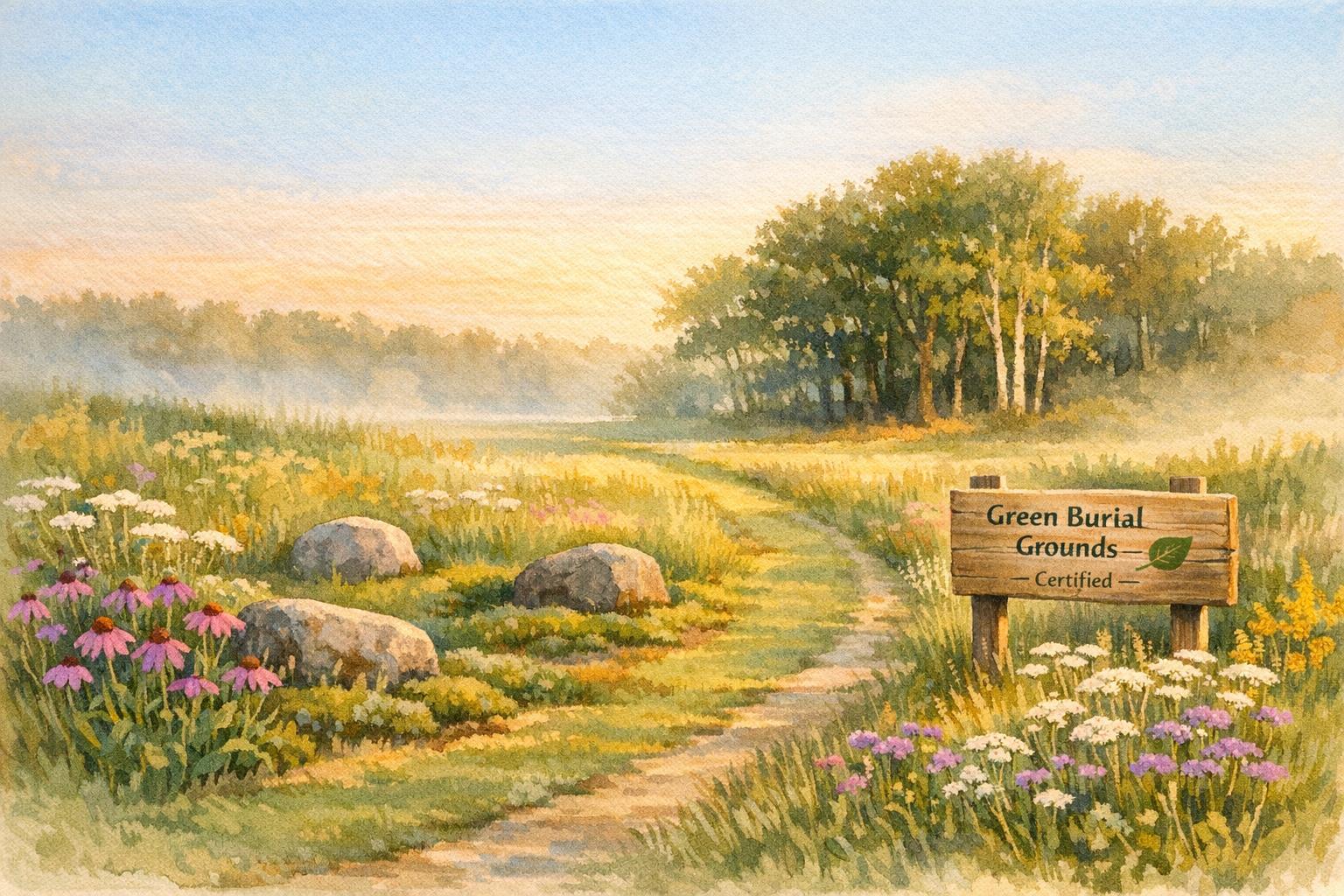
Green cemeteries offer a natural and eco-friendly alternative to traditional burials. These cemeteries avoid harmful chemicals, concrete vaults, and non-biodegradable materials, allowing for natural decomposition and reduced environmental impact. With around 220 such cemeteries in the U.S., they provide options that align with ecological values while being cost-effective and meaningful for families.
Here’s what you need to know:
- Types of Green Cemeteries:
- Hybrid Cemeteries: Sections within conventional cemeteries for eco-friendly burials.
- Natural Cemeteries: Entirely dedicated to green practices.
- Conservation Cemeteries: Burial fees support land restoration and preservation.
- Why Choose Green Cemeteries?
- Cost: Plots range from $500–$5,000, often cheaper than traditional burials.
- Health and Safety: Avoids toxic embalming fluids and reduces occupational risks.
- Family Involvement: Loved ones can participate in burial preparations, offering a personal grieving process.
- How to Verify Credentials:
- Look for certification by the Green Burial Council (GBC).
- Use tools like the GBC Cemetery Provider Map to find certified cemeteries.
- Key Features to Evaluate:
- Burial materials (biodegradable caskets or shrouds).
- Land management practices (pesticide-free, native vegetation).
- Accessibility and location.
Green cemeteries promote a simpler, natural approach to burial while conserving resources and supporting ecosystems. Whether you prefer a hybrid option or a conservation-focused site, tools like the GBC directory make it easier to find a certified cemetery near you.

Types of Green Cemeteries: Features, Costs, and Environmental Impact Comparison
Green Burial Defined: Clarifying Definitions in an Evolving Landscape
sbb-itb-cfbc7e6
How to Verify Green Cemetery Credentials
Not every cemetery claiming to be “green” truly meets eco-friendly standards. According to the Federal Trade Commission, about 60% of environmental claims made by companies are either exaggerated or outright misleading. This makes it essential to verify the cemetery’s credentials.
The Green Burial Council (GBC) is the leading authority for certifying eco-friendly cemeteries in the U.S. Their certification process is thorough, requiring providers to submit actual documentation, policies, and practices for review – not just marketing materials. As the GBC puts it:
“Unlike organizations that rely on free membership pledges without verifying claims, the GBC works closely with providers to review their actual documents, policies, and practices, ensuring they meet proven, verifiable standards.”
To confirm a cemetery’s credentials, look for the GBC seal on their website and cross-check their status on the GBC Cemetery Provider Map. The GBC directory, which draws over 10,000 monthly visits from eco-conscious individuals, is a trusted tool for identifying certified green burial sites.
Trusted Certifications to Look For
Once you’ve verified a cemetery’s certification, it’s helpful to understand the different levels of commitment. The GBC certifies three types of cemeteries:
- Hybrid cemeteries: Conventional cemeteries with specific areas designated for green burials.
- Natural burial grounds: Cemeteries fully dedicated to sustainable burial practices.
- Conservation burial grounds: The most eco-focused option, partnering with land trusts and maintaining permanent conservation easements.
Regardless of the type, all GBC-certified cemeteries must meet strict requirements, such as banning toxic embalming fluids, eliminating vaults or liners, and requiring biodegradable burial containers. Providers are also required to clearly document their burial practices and land management efforts.
Key Standards and Requirements
Beyond basic certification, additional practices can indicate a cemetery’s commitment to environmental stewardship. For instance, conservation burial grounds must conserve or restore at least 20 acres of land (or 5 acres if adjacent to protected areas). They’re also required to allocate at least 10% of burial plot sales to an endowment fund for long-term maintenance.
Ask for the cemetery’s Ecological Impact Assessment and Maintenance and Operations Manual. These documents should outline the steps taken to protect habitats and confirm that synthetic herbicides, pesticides, and fertilizers are no longer in use. For the highest level of protection, check for a legally binding conservation easement or deed restriction to ensure the land remains protected indefinitely.
Burial density is another key factor. Natural burial grounds are limited to 500 burials per acre, while conservation burial grounds are capped at 300 burials per acre. These limits help preserve the land’s ecological balance and ensure sustainable use.
Where to Find Local Green Cemeteries
Finding a green cemetery near you is easier than ever, thanks to online directories and state-specific resources. These tools work hand-in-hand with the credential verification process mentioned earlier. One of the most prominent resources is the Green Burial Council (GBC) Cemetery Provider Map, which highlights 87 certified eco-friendly cemeteries across North America. These cemeteries are divided into three categories: Conservation, Hybrid, and Natural.
Another valuable resource is the US Funerals Online Green Burial Directory, which lists around 220 natural burial cemeteries across the United States. This directory organizes options by state, making it simple to explore what’s available in your region.
Using Online Green Cemetery Directories
The GBC provider map offers a “Radius” filter that can be set to 100 miles, helping you locate cemeteries within a reasonable distance. With the “Use my location” feature, you can center the search around your zip code automatically. Each listing clearly indicates whether a site is Hybrid (H), Natural Burial (NB), or a Conservation Burial Ground (CBG), making it easy to align your choice with your environmental preferences.
Additionally, the GBC Funeral Home Map helps locate certified funeral directors who provide eco-friendly services.
Once you’ve identified potential cemeteries online, consulting state-specific guides can provide further details on local options and regulations.
State and Regional Availability
State guides offer deeper insights into green burial options specific to your area. States like California, New York, Florida, Ohio, Pennsylvania, and Texas provide detailed resources and networks of green burial providers. For instance, Massachusetts has several hybrid cemeteries in towns such as Heath, Springfield, and Warwick. Meanwhile, states like Florida and Georgia feature Conservation Burial Grounds such as Prairie Creek and Honey Creek Woodlands.
Hybrid cemeteries, which are traditional cemeteries with designated green sections, are the most commonly available type across the country. Even if a dedicated natural burial ground isn’t nearby, these hybrid options often provide an accessible alternative. However, the availability and features of green burial sites can vary widely depending on the region and the type of cemetery.
Evaluating Green Cemetery Options
Once you’ve identified local green cemeteries, it’s time to weigh your options based on their environmental practices, accessibility, and costs. These factors can vary greatly between sites, influencing the overall experience and sustainability of your choice. Here’s how to assess these options effectively.
Key Features to Compare
Cemetery type is a crucial starting point. Determine whether the site is a hybrid cemetery (a traditional cemetery offering green sections), a fully natural burial ground, or a conservation burial ground focused on legal protections and ecosystem restoration efforts.
Environmental practices should be carefully examined. Look for cemeteries that enforce eco-friendly measures like using biodegradable materials, avoiding vaults, and managing land without herbicides or pesticides. For perspective, green burials can offset around 25 pounds of carbon per burial, whereas traditional burials can produce between 330 and 440 pounds of CO₂.
Location and accessibility are practical considerations. Think about how far the cemetery is for family visits and whether the setting aligns with your preferences. Conservation burial grounds often provide remote and protected natural habitats, while hybrid cemeteries are typically more accessible and closer to urban areas.
Burial materials and markers are another factor. Ensure the cemetery permits biodegradable caskets and natural markers like fieldstones or native plants, which help preserve the natural landscape.
Pricing is an essential consideration, as costs can vary significantly. Green burial plots generally range from $500 to $5,000, with professional services costing between $2,500 and $3,500. Family-directed green burials can cost less than $1,000. In comparison, the average traditional burial costs around $8,300.
Comparison Table of Green Cemetery Features
Here’s a quick reference table to compare practical and environmental features of selected green cemeteries:
| Cemetery Name | Location | Type | Key Features | Contact |
|---|---|---|---|---|
| Prairie Creek Conservation Cemetery | Gainesville, FL | Conservation | Protected by easement; habitat restoration focus | (352) 336-5910 |
| Foxfield Preserve | Wilmot, OH | Conservation | Wildlife preserve setting; native plantings | (330) 359-5235 |
| Greensprings Natural Cemetery | Newfield, NY | Natural | Dedicated natural ground; no vaults or chemicals | (607) 564-7577 |
| Cedar Lawns Memorial Park | Redmond, WA | Hybrid | Traditional cemetery with an eco-friendly area | (425) 885-2414 |
This table can help you quickly identify the features that matter most to you, from environmental commitments to accessibility and services.
Making Your Final Decision
Choosing a green cemetery means weighing practical needs against your environmental values and family expectations. To make an informed choice, use these specific questions to ensure the cemetery aligns with both your priorities.
Questions to Ask Cemetery Operators
Start by confirming if the cemetery requires an outer burial container or vault. A truly green cemetery avoids concrete vaults, allowing the body to naturally decompose in direct contact with the soil. Ask about acceptable biodegradable materials for caskets and shrouds, including whether homemade options are allowed.
Next, inquire about the cemetery’s land management practices. Do they use pesticides, herbicides, or irrigation systems?. Understanding their approach to opening, closing, and maintaining green graves will give you a sense of how the site will evolve over time. Unlike traditional cemeteries, green burial grounds often focus on native vegetation and ecosystem health.
Check their memorialization options. Can you use GPS coordinates, flat natural stones, or native plants, or is no physical marker allowed?. Many green cemeteries restrict upright headstones to preserve the natural landscape. For conservation burial grounds, ask if the land is protected by a conservation easement, ensuring its long-term preservation. If any practices seem unclear, refer back to Green Burial Council (GBC) certification standards for clarification.
Request written bylaws and policies to confirm how the land will be maintained over time. Ask about endowment or maintenance funds to ensure the cemetery’s sustainability. If you’re planning a DIY funeral, confirm that family members can assist with transporting the deceased and participate in the burial process.
These questions will help you refine your evaluation and determine which cemetery best matches your environmental and family needs.
Balancing Family Preferences and Environmental Goals
Green burials may feel like “unfamiliar territory” compared to traditional options, but as one funeral home describes, they can provide a “thoughtful, informed, and deeply meaningful” experience.
“There are many ‘shades’ of green possible when planning a green funeral or natural burial, based on your preferences, available funeral home services, cemetery capabilities, and local rules and regulations.”
– Betz-Jastremski Funeral Home
If your family has specific religious or cultural needs, ask cemetery operators how they accommodate those within an eco-friendly framework. For example, the South Florida Jewish Cemetery in Lake Worth, FL, aligns religious traditions with GBC-certified Hybrid Cemetery standards. If some family members prefer traditional elements, hybrid cemeteries might offer a balance of eco-friendly and conventional options.
Consider the type of cemetery that suits your situation. Hybrid cemeteries provide a familiar setting while reducing environmental impact. Natural burial grounds, like Bellefontaine Cemetery in St. Louis, MO, focus on dedicated eco-friendly spaces. Conservation burial grounds, such as Carolina Memorial Sanctuary in Mills River, NC, combine burial with active land preservation efforts.
Talk openly with your family about the cemetery’s appearance. Green cemeteries often feature natural vegetation instead of manicured lawns and flat markers instead of upright headstones. While some families find comfort in knowing their loved one’s resting place contributes to habitat restoration, others may need time to adjust to the less formal look.
Finally, consider the costs. Green burial plots typically range from $500 to $5,000, with professional service fees falling between $2,500 and $3,500.
Conclusion
Match your burial choice to your environmental priorities by understanding the three levels of certification: Hybrid Burial Grounds provide traditional cemetery settings with eco-friendly options, Natural Burial Grounds enforce stricter guidelines like banning vaults and toxic embalming, and Conservation Burial Grounds go a step further by incorporating land trust protections.
The Green Burial Council’s provider map lists 87 certified burial sites across North America. Use this tool to explore your options, and confirm details such as the use of grave liners and burial vaults and pesticide-free land management. If a site isn’t GBC-certified, contact them directly to ensure they meet the necessary standards, especially when it comes to legal protections for Conservation Burial Grounds. These steps help ensure your choice aligns with both ecological goals and personal values.
“Green burial is a way of caring for the dead with minimal environmental impact that aids in the conservation of natural resources, reduction of carbon emissions, protection of worker health, and the restoration and/or preservation of habitat.”
– Green Burial Council
Choosing a green burial is a meaningful way to honor your loved ones while contributing to habitat restoration, sustainable land use, and the preservation of natural resources. Whether you prefer a traditional cemetery setting or the untamed beauty of a conservation ground, green burial offers a thoughtful approach to celebrating life. By planning ahead and balancing family needs with environmental goals, your decision can leave a lasting legacy that supports the natural cycle of life.
FAQs
How can I verify if a cemetery is truly eco-friendly?
To ensure a cemetery aligns with eco-friendly values, start by verifying if it’s certified by organizations like the Green Burial Council (GBC). Such certifications show the cemetery follows strict guidelines, including avoiding toxic chemicals, using biodegradable materials, and protecting natural habitats.
It’s also helpful to ask about the cemetery’s practices. Look for options like natural or conservation burial grounds, which prioritize minimal impact on the environment and may even support habitat restoration. Taking a closer look at these details can help you make a choice that reflects your commitment to sustainability.
How do the costs of green burials compare to traditional burials?
Green burials tend to be much easier on the wallet compared to traditional burials. Typically, they cost between $1,500 and $4,000, mainly because they skip pricey elements like embalming, concrete vaults, and elaborate caskets. Instead, they use natural, biodegradable materials, which naturally keep expenses lower.
On the other hand, traditional burials can run over $9,000, with the median price for funeral and burial services hovering around $8,300 – and that’s before adding extra costs for embalming or high-end caskets. The straightforward approach and eco-conscious focus of green burials make them an appealing, budget-friendly option for many families.
What are the environmental advantages of choosing a green cemetery?
Opting for a green cemetery offers several benefits for the planet by focusing on eco-friendly practices and reducing harm to the environment. These cemeteries use biodegradable materials, such as natural caskets or burial shrouds, and avoid harmful chemicals like embalming fluids that could contaminate soil or water.
They also play a role in land conservation, often protecting natural habitats and encouraging biodiversity. Many green cemeteries are thoughtfully designed to blend with their surroundings, ensuring burial practices work in harmony with local ecosystems rather than disrupting them. Choosing this option is a thoughtful way to honor loved ones while caring for the Earth.