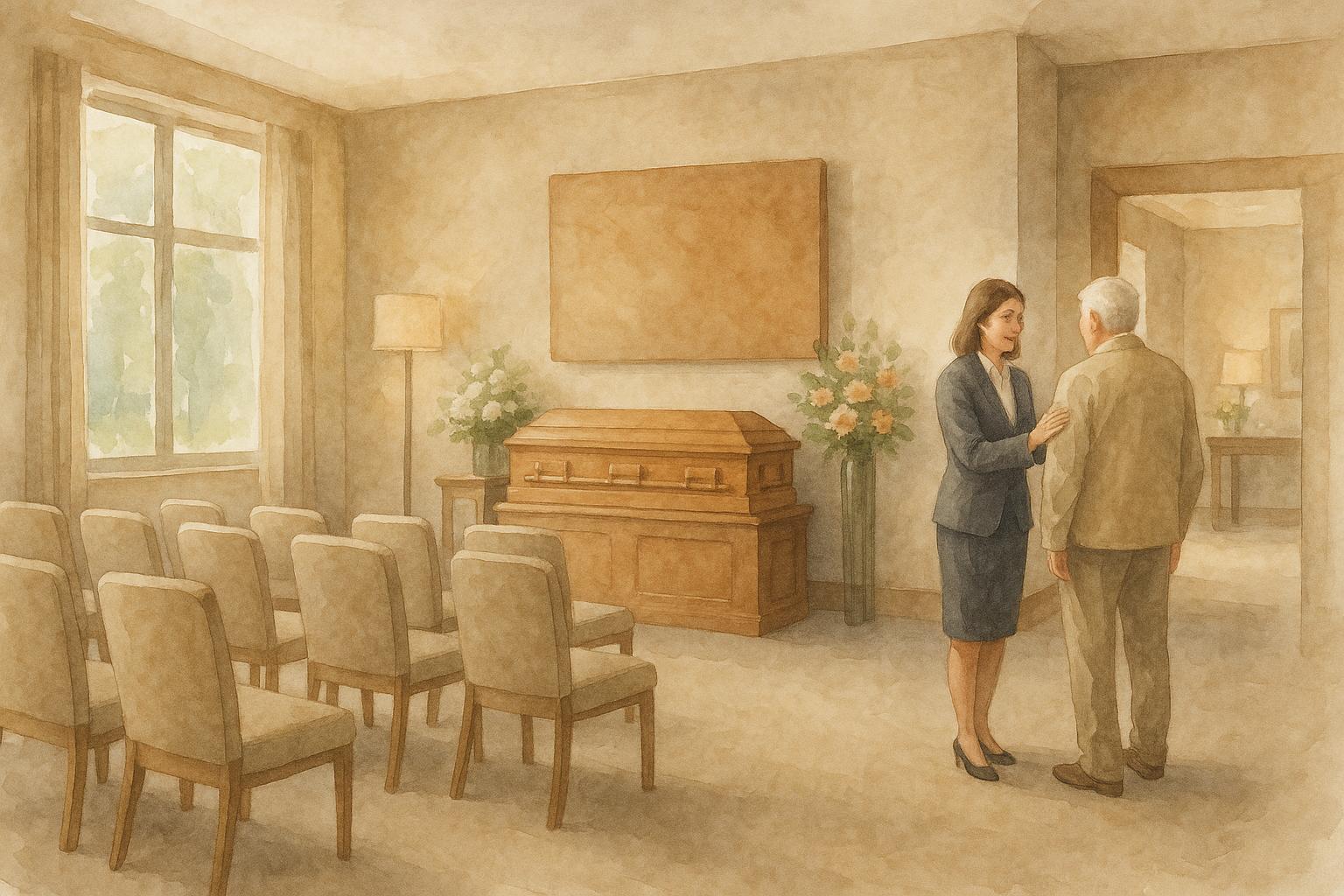
When choosing a funeral home, focus on the amenities, pricing, and staff professionalism to ensure a respectful and comfortable experience for your family. Here’s a quick guide to help you evaluate your options:
- Facility Tour: Check the cleanliness, layout, and available spaces (viewing rooms, ceremony areas, private family rooms).
- Technology: Test audio-visual equipment, livestreaming capabilities, and sound systems for clear and reliable service.
- Service Amenities: Look for catering options, accessibility features (wheelchair ramps, elevators), and comfortable seating arrangements.
- Personalization: Ensure the funeral home accommodates religious, ethnic, or eco-friendly preferences.
- Pricing: Request a General Price List (GPL) to compare costs and identify hidden fees or bundled vs. individual service pricing.
- Staff: Evaluate their professionalism, licensing, and ability to handle your specific needs with care and respect.
Take your time to visit multiple facilities, ask detailed questions, and compare written estimates to make an informed decision.
Funeral Home or Five Star Hotel? – Behind the Scenes
1. Touring the Facility: What to Look For
Taking a tour of a funeral home can help you determine if the space aligns with your family’s needs. It also provides an opportunity to gauge the atmosphere and professionalism of the establishment during what can be an emotional time. Pay attention to the overall condition of the facility – floors, walls, furniture, and fixtures. Clean, well-maintained spaces often signal high standards and attention to detail.
As you walk through the facility, evaluate the layout. Is there enough space for guests to move around comfortably? Are the different areas – entrance, viewing rooms, ceremony spaces, and reception areas – clearly marked and easy to navigate? The way the staff interacts with you during the tour can also give you an idea of the service quality you can expect later.
Here’s a closer look at some key areas to assess during your visit.
1.1 Visitation and Viewing Rooms
Visitation and viewing rooms should feel welcoming and provide enough space for everyone attending. Check the seating arrangements – are there enough chairs for elderly guests or those who may need to sit for longer periods? Since visitations can last several hours, having adequate, comfortable seating is essential.
Lighting is another important factor. It should create a calm, respectful ambiance without being too harsh or overly dim. Proper ventilation and climate control are also critical, especially when the room is full of people. Look for clean, organized furniture and decor that conveys dignity. The viewing area should allow the deceased to be displayed respectfully, with privacy features and thoughtful amenities like tissues or water for guests.
Additionally, ask if the funeral home allows families to bring light refreshments, such as snacks or beverages. These small touches can make the experience more comfortable for everyone.
1.2 Ceremony or Chapel Spaces
The ceremony or chapel area should suit the type of service you’re planning, whether it’s a traditional religious ceremony, a more personalized celebration, or something in between. Confirm the seating capacity and take note of the room’s size – too small, and guests may feel cramped; too large, and it could feel impersonal for a smaller gathering.
Sound quality is often overlooked but incredibly important. Test the acoustics by having someone speak from the front while you listen from various spots in the room. Is the audio clear throughout? If you’re planning to include music, recorded messages, or video tributes, check the audio-visual system to ensure it meets your needs. Poor sound can detract from even the most carefully planned service.
Look at the decor and see how adaptable it is. Some families may want to incorporate specific religious or cultural elements, such as ceremonial items or decorations. The funeral home should be able to accommodate these requests. Also, check if the lighting can be adjusted to suit the mood of the ceremony. Make sure there’s a podium or lectern for speakers and that the space is accessible for guests with mobility challenges.
1.3 Private Family Rooms
Private family rooms are essential for immediate family members who need a quiet space to rest, reflect, or have private conversations. These rooms offer a retreat from the main service areas and can be a source of comfort during an emotionally draining day. Ensure the funeral home has at least one designated private area that’s large enough for your family and close relatives.
Privacy is key. The room should have a door that closes securely to block out noise from the main areas. Look at the furnishings – comfortable seating and proper climate control are important since families may spend significant time there. Check for nearby restrooms and access to refreshments. Some families also appreciate having a telephone in the room for essential calls.
The location of the private family room matters as well. It should be separate from the viewing or ceremony areas but still close enough for easy access. Ask the staff how they handle transitions between private and public spaces, such as moving from the family room to the ceremony. Understanding these logistics can help ensure your family has the privacy you need while staying involved in the service.
As you tour the facility, take notes or photos of each space, including its size, condition, and amenities. Keep track of the staff members you interact with for future follow-up. This preparation will help you make an informed decision that aligns with your family’s needs and preferences.
2. Checking Technology and Service Amenities
Modern funeral services often incorporate advanced technology and thoughtful amenities to help families create meaningful tributes. These features also ensure that everyone, whether attending in person or remotely, can participate fully. Beyond technological tools, practical amenities like catering and accessibility options play a key role in making guests feel comfortable and supported.
Once you’ve assessed the physical spaces, it’s time to focus on the technology and service features that enhance the overall experience. Request live demonstrations of sound systems, video setups, and other key equipment. This hands-on approach ensures the funeral home’s offerings align with your expectations and needs. By evaluating these aspects, you can ensure every detail contributes to a service that honors your loved one.
2.1 Audio-Visual Equipment
Clear, high-quality sound is essential for any ceremony. Test the microphones, sound systems, and volume controls to ensure they deliver clear audio throughout the space. This is especially important in larger venues where sound clarity can be a challenge.
Video displays play a big role in modern services, allowing families to share slideshows, memorial videos, or cherished photographs. Ask about the size and number of available screens, and whether they have projection equipment for larger gatherings. If you’re planning a video tribute, confirm the supported file formats and whether the funeral home handles the technical setup or requires you to bring your own equipment.
Livestreaming services are increasingly popular, enabling family and friends from different locations to join in real time. When evaluating this feature, ask about the internet bandwidth to ensure it can handle multiple viewers without interruptions. Find out which platform they use and whether guests will need special links or passwords to access the stream.
Recording the service can provide a lasting keepsake for your family. Ask how long recordings are stored, how to access them, and whether there are additional fees for this service. It’s also worth inquiring about contingency plans in case of equipment malfunctions, so you’re prepared for any unexpected issues.
2.2 Catering and Reception Facilities
Practical amenities like catering and reception spaces are just as important as technical setups. Post-service gatherings provide a chance for family and friends to connect, share memories, and support one another. Some funeral homes offer in-house catering, while others partner with local vendors. This can impact both convenience and cost, so be sure to ask about their specific arrangements.
Discuss menu options and whether dietary accommodations are available. Some funeral homes include basic refreshments, such as coffee and tea, in their standard pricing, while others provide full meal services for an additional fee. Request written pricing details to compare costs across different facilities.
It’s also important to clarify who handles setup and cleanup. Determine whether the funeral home staff will manage these tasks or if your family will need to coordinate them. If you prefer a specific caterer or want to include homemade dishes, ask if outside catering is allowed.
2.3 Accessibility Features
Accessibility is a critical consideration to ensure all guests can participate comfortably. Start by examining the entrance – look for wheelchair ramps or level entryways. If the building has multiple floors, elevators are a must. If there isn’t one, confirm that all key areas, including viewing rooms, chapels, and restrooms, are located on the ground floor. Check doorway widths to ensure they can accommodate wheelchairs.
Parking is another important factor. Verify that the funeral home has designated accessible parking spaces close to the entrance, especially since this can be crucial during bad weather.
Restroom facilities should meet ADA standards, with features like grab bars, accessible sinks, and enough space for wheelchairs to maneuver. Confirm whether all restrooms in the facility are accessible or if only certain ones meet these requirements.
Seating arrangements in viewing and ceremony areas should also be considered. Some guests may need chairs with armrests or additional space for walkers. Ask the staff about their flexibility in accommodating these needs and whether seating layouts can be adjusted.
Service animal policies are another important aspect. Ensure the staff is prepared to assist guests with mobility challenges in a respectful manner and confirm if the funeral home has documented procedures for accessibility accommodations.
Creating a checklist during your tour can help you systematically evaluate each facility’s offerings. Note which amenities are included in standard pricing and which may involve extra fees. This organized approach allows you to make informed decisions based on your family’s specific needs.
3. Assessing Service Options and Personalization
Once you’ve explored the facilities and technological features, it’s time to consider personalized service options and pricing. While the basics are important, personalization ensures the tribute truly reflects your loved one’s personality and life story.
Different funeral homes offer varying services, so understanding what’s included in their packages versus what costs extra can help you make informed choices. Personalization options allow you to create a service that feels meaningful and meets both practical and emotional needs.
3.1 Standard and Optional Services
Funeral homes typically divide their pricing into two categories: standard services and optional services. Standard services – often referred to as the basic service fee – include the use of the facility, staff and director services, coordination with third parties, and essential documentation like permits and death certificates. This fee is non-negotiable and applies regardless of the other services you choose.
Optional services, on the other hand, cover things like body transportation, embalming, viewings or wakes, vehicle rentals, and burial or cremation containers. These are charged separately, giving you more flexibility based on your preferences and budget.
When meeting with a funeral director, ask for a detailed breakdown of these services. Request a General Price List (GPL), which funeral homes are legally required to provide both in person and over the phone. This document outlines individual service costs, making it easier to compare options.
Some funeral homes also offer bundled pricing. While packages may seem convenient, compare them with individual service prices to ensure you’re not paying for extras you don’t need. Regulations require itemized pricing for transparency, so use this to your advantage. Additionally, ask if packages can be customized by adding or removing services.
Be sure to clarify whether the basic service fee is included in the cost of specific items like caskets or if it appears multiple times across different services. Also, inquire about keepsake options such as memorial cards or video recordings of the service, which can provide lasting memories for your family.
If you’re looking for a cost-effective option, direct cremation might be worth considering. This involves cremation without a viewing or ceremony beforehand, but you can still personalize the experience by holding a memorial service afterward at a location of your choice. For those seeking more personalization, full-service cremation with a memorial is available, though it typically comes at a higher cost.
Finally, consider how well the funeral home can accommodate specific traditions, whether religious, cultural, or personal.
3.2 Religious and Ethnic Accommodations
A funeral home’s ability to honor specific religious or ethnic traditions can deeply influence how meaningful the service feels to your family. During your initial consultation, ask whether they can provide services tailored to your specific needs.
Discuss their experience with your religious or cultural practices and whether they work with knowledgeable clergy or community leaders. Different faiths have unique requirements, and the funeral home should be prepared to meet them. For instance:
- Jewish traditions often require burial within 24 hours and prohibit embalming.
- Islamic customs include ritual washing of the body and burial without a casket.
- Catholic services may involve prayers, masses, and specific rituals.
- Hindu ceremonies often include cremation and particular ceremonial practices.
Ask if the funeral home has dedicated spaces for religious observances, such as prayer rooms or areas for ritual washing. Flexibility in scheduling services to align with religious requirements, like observing the Sabbath or specific mourning periods, is also crucial.
Additionally, confirm whether the funeral home can handle ceremonial elements like coordinating with religious officials, providing ritual items, and following the proper sequence of events. If you’re unsure, request references from families with similar traditions for added confidence.
For other service types, such as military honors, non-denominational ceremonies, or fraternal rituals, ask about the level of coordination the funeral home provides and whether additional fees apply.
3.3 Eco-Friendly Options
For families prioritizing sustainability, eco-friendly funeral options are becoming increasingly accessible. If this aligns with your values, ask about green burial alternatives and environmentally conscious practices.
Biodegradable caskets made from materials like bamboo, willow, or seagrass are an option worth exploring. Compare their costs to traditional caskets to determine what works best for your budget.
Natural burial grounds are another option, emphasizing environmental preservation by avoiding embalming chemicals, concrete vaults, and non-biodegradable materials. These cemeteries often maintain natural landscapes and may use native plants instead of headstones. Ask the funeral home if they partner with certified green cemeteries and gather details about their practices.
Since traditional embalming involves chemicals that can harm the environment, inquire about alternatives like refrigeration or dry ice for temporary preservation. Direct burial or immediate cremation can also eliminate the need for embalming altogether.
For cremation, consider biodegradable urns if you plan to scatter or bury the remains. Some urns are designed to support tree growth, creating a living memorial. Ask about the materials used and their decomposition timelines.
Lastly, evaluate the funeral home’s overall environmental practices. Do they use eco-friendly products in their preparation rooms? How do they manage waste disposal? Some funeral homes go beyond individual services and adopt broader green practices.
When considering eco-friendly options, verify the credentials of any green cemeteries and ensure biodegradable products meet industry standards. Request written pricing details for all green alternatives to make choices that align with both your values and budget.
As you finalize your preferences, document them in writing. This ensures the funeral director clearly understands your wishes regarding personalization, traditions, and environmental considerations. Always confirm their ability to meet your requests before committing to their services.
sbb-itb-cfbc7e6
4. Understanding Pricing and Costs
When planning a funeral, clear and transparent pricing is just as important as evaluating the amenities of a facility. It ensures you get the services you need without unexpected expenses. Federal law requires funeral homes to provide transparent pricing, so make sure to get all details in writing and carefully compare costs. To manage expenses, review price lists, weigh bundled versus individual services, and watch for any hidden fees. In this section, we’ll walk you through how to read pricing documents and avoid surprises.
4.1 Reading the General Price List (GPL)

Funeral homes are legally required to provide a General Price List (GPL), which itemizes all goods and services they offer, along with their costs . This document is a key resource for budgeting and comparing prices.
The GPL typically starts with a basic service fee, which covers essential tasks like funeral planning, obtaining permits and death certificates, and coordinating with cemeteries or crematories. This fee is non-negotiable and applies regardless of the other services you choose. As you review the GPL, pay attention to what’s included in this fee and what might incur additional charges. For instance, prices for direct cremation or immediate burial often include the basic service fee, while traditional funerals might list it as a separate cost.
If you find anything confusing, don’t hesitate to ask the funeral director for clarification. Federal regulations ensure that funeral homes can only charge for services you select or those legally required. For example, if a cemetery or crematory requires certain items, like an outer burial container, this must be disclosed in writing. Always request a detailed written estimate for your chosen arrangements so you can accurately compare costs across different providers.
4.2 Package Pricing vs. Individual Items
After reviewing the GPL, you’ll encounter two main pricing options: bundled packages and à la carte services. Understanding these can help you make informed and cost-effective decisions.
Package pricing combines multiple services and items into a single set price. This can be convenient and sometimes more affordable, but it may include services you don’t need, which could drive up costs unnecessarily. On the other hand, à la carte pricing allows you to select and pay for individual services, offering more transparency and flexibility if you only want specific options or essentials.
When evaluating packages, ask for an itemized breakdown to see what’s included and whether it aligns with your needs. Check if packages can be customized by adding or removing services, and confirm that the basic service fee is not charged more than once in your final bill. This level of clarity makes it easier to decide whether bundling or selecting individual items is the better choice for your situation.
4.3 Common Hidden Fees
Even with transparent pricing requirements, some fees might not be immediately obvious. Here are a few common hidden costs to watch out for:
- Weekend and holiday fees: Additional charges may apply for services scheduled on weekends or holidays.
- Mileage charges: If the funeral home needs to travel a significant distance, such as for transferring the deceased or graveside services, extra fees may be added.
- Facility usage fees: Costs can vary based on which rooms are used and how long they are occupied.
- Transportation costs: Beyond the basic hearse service, you may face extra charges for additional vehicles, like limousines for family members.
- Equipment and supplies: Fees for items used during specific ceremonies, such as equipment for religious rituals or audiovisual setups, may be separate.
- Additional body preparation: Services beyond standard embalming, such as special cosmetic work, come with extra costs.
To avoid surprises, always request an itemized written estimate that includes all potential charges. It’s also a good idea to contact the cemetery or crematory directly to understand any additional requirements, like outer burial containers, that could impact your total expenses. Comparing written estimates from multiple funeral homes will help you get a clear picture of all costs and make an informed decision.
5. Evaluating Staff Qualifications and Service
When choosing a funeral home, it’s not just about the amenities or pricing. The expertise and demeanor of the staff are key factors in ensuring your family’s needs are handled with care and respect. The professionalism, training, and attentiveness of those guiding you through such a challenging time can make all the difference in creating a meaningful and compassionate experience. Taking the time to evaluate staff qualifications and service will help you determine if the funeral home can provide the thoughtful and personalized care your loved one deserves.
5.1 Initial Consultation Experience
Your first meeting with the funeral home staff is more than just an introduction – it’s a chance to gauge how they’ll handle your arrangements. Pay attention to how the funeral director interacts with you. Are they making eye contact? Do they listen closely to your concerns? Professional staff should communicate clearly, avoiding complicated jargon, and instead explain everything in straightforward, understandable terms.
Compassionate staff will acknowledge your emotions, giving you the time and space to ask questions without feeling rushed. They should also ask thoughtful questions to better understand your needs and preferences, ensuring the service is truly personalized.
A knowledgeable funeral director will break down pricing in detail, explaining what’s included in standard services versus optional add-ons. They should openly discuss alternatives, such as direct cremation versus full-service cremation or burial options like in-ground plots versus mausoleums, without pressuring you into higher-cost choices. If you notice evasiveness about pricing or a push toward expensive options without a thorough discussion of alternatives, consider this a warning sign about their transparency and professionalism.
It’s also important to ask about the funeral home’s availability and who will oversee your arrangements. Knowing whether the same funeral director will work with you throughout the process or if multiple staff members will be involved can help you assess the continuity of care.
Additionally, check whether the staff provides written materials or summaries of your discussions. This shows they prioritize clear communication and aim to avoid misunderstandings. If you have special requests – like specific music, readings, or ceremonial elements – make sure these are included in the written service agreement for clarity and accountability.
After your initial consultation, take the time to verify the staff’s formal qualifications and experience.
5.2 Licensing and Experience
Funeral directors in the United States are required to be licensed in their respective states. Don’t hesitate to ask to see current licenses, and consider verifying them through your state’s regulatory board. Licensing requirements typically include completing a funeral service education program, passing a national board exam, and completing apprenticeship hours (usually between 1,000 and 2,000, depending on the state).
Ask about the funeral director’s experience and whether they’ve received specialized training in areas that might matter to you, such as military honors, religious ceremonies, or grief counseling. Continuing education credits are another good sign – they show that the director is committed to staying up-to-date with industry standards and best practices. It’s also worth asking if the funeral home has an approved managing funeral director on-site, as this adds a layer of oversight and accountability.
If your family has specific religious or cultural traditions, check whether the staff is familiar with these practices or willing to learn about them. A professional team will respect and accommodate your traditions rather than treat them as burdensome or out of the ordinary.
You should also inquire about grief support services. Does the funeral home offer these, and has the staff received any training in grief counseling or bereavement support? Staff trained in these areas will often ask open-ended questions about the deceased and your relationship with them, helping to create a more personalized service. They’ll validate your emotions without minimizing your grief – avoiding phrases like “they’re in a better place” – and will respect your pace when making decisions. Some funeral homes may even partner with mental health professionals or grief counselors to provide ongoing support after the service.
Be wary of any staff who seem to pressure you into quick decisions, discourage questions, or become defensive when asked for clarification. If they appear more focused on upselling than on meeting your needs, or if they cannot provide clear information about licensing, experience, or service options, this could be a red flag. Similarly, if they discourage you from touring the facility or speaking with a managing funeral director, proceed with caution.
Evaluating the staff’s qualifications and demeanor is a crucial part of your overall assessment. It complements your review of the facility and pricing, ensuring you select a funeral home that will honor your loved one with care and respect.
Conclusion
Choosing the right funeral home involves carefully weighing factors like amenities, pricing, and the expertise of the staff. Look for facilities that provide well-maintained spaces for viewings, ceremonies, and private family gatherings – spaces that honor your loved one while offering comfort to your family.
Make sure pricing is transparent by reviewing a written General Price List. This document should clearly separate basic service fees from optional costs, helping you avoid any unexpected expenses. Always ask for a detailed breakdown before making a commitment.
The quality of the staff is equally important. During your initial consultation, take note of their professionalism and credentials to ensure they can meet your expectations with care and respect.
To make the best choice, compare at least two funeral homes. Visit their facilities, ask thorough questions, and check online reviews to confirm they align with your needs. Take your time – there’s no need to rush such an important decision.
Whether you’re looking for advanced audio-visual options, catering services, or specific cultural accommodations, trust your instincts. By evaluating all these aspects together, you can select a funeral home that offers the care and support your family deserves.
FAQs
What should I look for when evaluating funeral home amenities?
When selecting a funeral home, it’s essential to consider the amenities they provide to ensure they align with your needs and preferences. Here are a few features to look out for:
- Catering services: Determine if the funeral home offers on-site catering or allows you to bring in an outside catering team for receptions or gatherings.
- Audio-visual capabilities: Check if they have up-to-date equipment for playing slideshows, videos, or even live streaming, which can be especially helpful for guests who cannot attend in person.
- Private family spaces: Look for comfortable, private rooms where your family can gather for quiet moments before or after the service.
Carefully reviewing these amenities can help make the experience more personalized and meaningful during what is often a difficult time.
How can I find a funeral home that respects specific cultural or religious traditions?
To ensure a funeral home respects and supports your cultural or religious practices, start by having an open conversation with their staff about your specific needs. Ask if they are familiar with your traditions, whether that involves particular rituals, dietary considerations for catering, or religious ceremonies. Inquire about their facilities and services, such as private family spaces or designated areas for prayer, to confirm they meet your expectations.
If you’re not sure how to approach this, it can help to prepare a list of key requirements beforehand. This might include questions about their flexibility, potential extra costs for specialized services, or whether they work with religious leaders. Clear and honest communication is crucial to finding a funeral home that will honor your traditions with care and dignity.
What should I check in a funeral home’s General Price List to avoid hidden fees?
When examining a funeral home’s General Price List (GPL), it’s important to carefully review the itemized costs for all services and amenities. The GPL should provide a clear breakdown of fees for essentials like transportation, embalming, facility use, and any additional options such as catering or audio-visual equipment.
Pay attention to any package deals that combine multiple services. These can sometimes save money, but it’s crucial to understand exactly what’s included. Ask whether substitutions or changes are allowed, and if they come with extra charges. If anything seems unclear, don’t be afraid to ask questions – clarity now can help you avoid unexpected costs later.
Taking the time to thoroughly review the GPL ensures you can make well-informed choices and steer clear of surprises during an already difficult time.