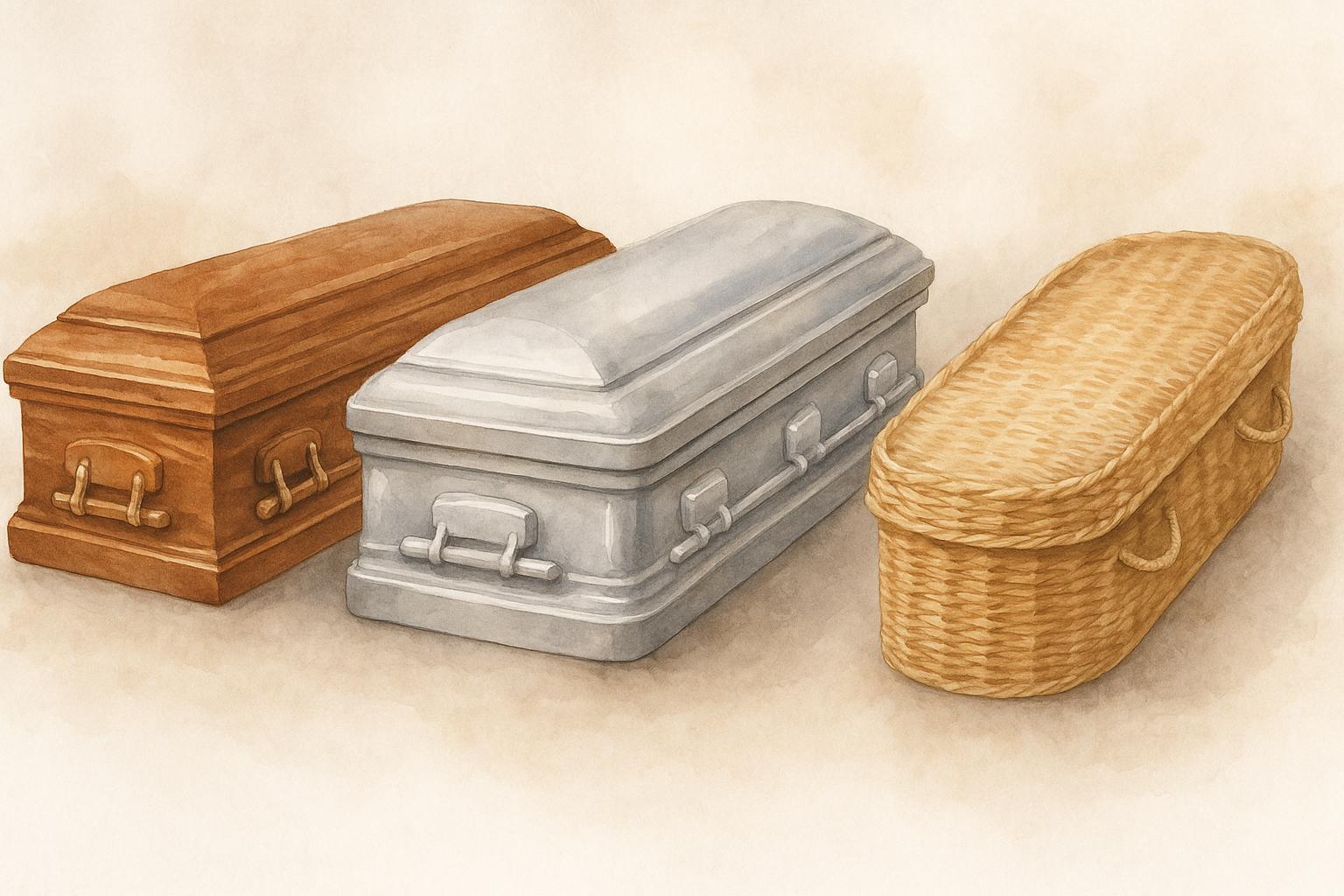
Selecting the right casket can be a challenging decision, balancing cost, durability, and personal values. Here’s a quick overview of the seven main types of caskets available:
- Solid Wood: Known for their natural beauty, these caskets range from affordable softwoods like pine to luxurious hardwoods like mahogany. Prices vary widely, from $1,500 to $10,000+.
- Veneer & Pressboard: A budget-friendly alternative to solid wood, these caskets mimic the look of wood and cost between $800 and $3,000.
- Steel: Durable and protective, steel caskets come in various gauges and finishes, priced from $1,200 to $8,000.
- Bronze & Copper: Premium metal options offering corrosion resistance and a polished look, priced between $3,000 and $15,000+.
- Fiberglass: Lightweight and resistant to environmental factors, these modern caskets cost $1,500 to $4,500.
- Wicker: Made from natural fibers like bamboo or willow, these biodegradable caskets cost $800 to $2,500.
- Cloth-Covered: Affordable and biodegradable, these caskets are priced between $500 and $1,200.
Each option caters to different needs, from sustainability to long-term durability. Keep reading for detailed insights into materials, pricing, and other considerations.
What types of caskets are available?
Casket Materials Explained
When planning for end-of-life arrangements, the choice of casket material can impact everything from cost and appearance to durability and environmental considerations. The main categories of casket materials include wood, metal, and biodegradable options, each catering to different preferences and priorities.
Wood caskets are a timeless option for many families in the U.S. They range from more affordable softwoods like pine to luxurious hardwoods such as mahogany or cherry. This variety allows for a blend of classic beauty and flexible pricing, making wood a popular choice for traditional ceremonies.
Metal caskets are built with durability in mind. Made from materials like steel, bronze, or copper, these caskets often feature protective designs that help resist moisture and other external elements. Bronze and copper, in particular, are prized for their resistance to corrosion and their sleek, polished appearance, offering a more modern aesthetic.
Biodegradable caskets are gaining traction as environmentally conscious options. Crafted from materials like wicker, bamboo, cardboard, or specially treated fabrics, these caskets are designed to break down more quickly, returning to the earth in a natural way. They align with the principles of green burials, appealing to those who prioritize sustainability.
Each material type impacts decomposition rates and costs differently. Wood caskets may take decades to decompose, metal options provide long-lasting durability, and biodegradable caskets break down relatively quickly. Prices range from budget-friendly to high-end across all categories, offering options for a variety of needs and preferences.
The next sections will take a closer look at the specifics of each type of casket.
1. Solid Wood Caskets
Solid wood caskets are a classic choice, offering a timeless and traditional appeal. Made entirely from genuine wood, they exude a sense of craftsmanship and natural beauty that resonates with many families.
Material
These caskets come in a variety of wood types, each with its own unique characteristics. For those seeking premium options, hardwoods like oak, cherry, mahogany, and walnut stand out. Oak features striking grain patterns and warm, light-to-medium brown tones. Cherry, on the other hand, develops a rich, reddish hue as it ages, adding depth to its appearance. Mahogany and walnut are prized for their luxurious, darker finishes and durability. If you’re looking for a more budget-friendly option, softwoods such as pine and poplar are available. Pine’s lighter color, accented by visible knots and grain patterns, brings a rustic charm, while poplar offers a smooth, adaptable surface.
Durability
The durability of a solid wood casket largely depends on the type of wood and the craftsmanship involved. Hardwoods are naturally denser and more resistant to moisture and wear compared to softwoods, making them a longer-lasting option. However, all wood caskets are influenced by environmental factors like moisture, temperature changes, and soil conditions. Features like thicker wood construction and reinforced joints can help preserve the casket’s structural integrity over time.
Decomposition Rate
The rate at which a wood casket decomposes depends on several factors, including the type of wood and the surrounding environment. Soil moisture, pH levels, and microbial activity all play a role, as do any finishes or sealants applied to the wood. These factors can either slow down or accelerate the natural breakdown process.
Environmental Impact
The environmental impact of solid wood caskets varies based on how the wood is sourced and processed. Caskets made from sustainably harvested or reclaimed wood tend to have a smaller ecological footprint. These materials also store carbon during their lifespan, which is gradually released as the wood decomposes. This balance between sustainability and natural decomposition makes wood caskets a thoughtful option for those considering environmental factors.
Typical Price Range
Pricing for solid wood caskets spans a broad spectrum. Softwood options are generally more affordable, while hardwood caskets, with their superior craftsmanship and luxurious finishes, come at higher price points. Custom designs or caskets with personalized details can add to the cost, reflecting the level of artistry and individuality involved in their creation.
2. Veneer and Pressboard Caskets
After considering solid wood and metal caskets, veneer and pressboard options emerge as a budget-friendly alternative that still delivers a polished, wood-like appearance. These caskets combine engineered wood materials with thin layers of real wood veneer, offering the look of solid wood at a more accessible price.
Material
Veneer caskets are constructed using a pressboard core, which is laminated with a thin sheet (1/16 to 1/8 inch) of real wood veneer. This veneer highlights the natural grain and beauty of premium woods like oak, cherry, or mahogany, while the pressboard core provides structural support. Pressboard itself is made from a mix of wood particles, sawdust, and adhesive resins, compressed under high pressure and heat.
During production, the veneer is bonded to the pressboard base with specialized adhesives, creating a consistent grain pattern and uniform coloring that’s hard to achieve with solid wood. Manufacturers often use techniques like book-matching or slip-matching to create symmetrical designs across the casket’s surface. This process not only enhances the visual appeal but also ensures a cohesive finish.
Durability
In terms of durability, veneer and pressboard caskets fall somewhere between solid wood and more basic options. The pressboard core can be sensitive to moisture, which might lead to swelling, warping, or veneer peeling. However, modern manufacturing techniques, including moisture-resistant adhesives, have improved their structural stability.
The veneer’s thickness is a key factor in durability – thicker veneers are less prone to cracking or separating over time. Features like reinforced corners, metal brackets, and proper sealing also contribute to the casket’s longevity. While these caskets may not last as long as solid hardwood models, they are designed to maintain their integrity for their intended purpose.
Decomposition Rate
How quickly veneer and pressboard caskets decompose depends on several factors. Synthetic adhesives and resins used in their construction slow the decomposition process compared to solid wood.
However, in high-moisture soil, the pressboard core may break down faster than solid wood once water seeps through the veneer layer. The veneer itself decomposes at a rate similar to solid wood of the same species, but the core’s particle composition makes it more susceptible to moisture.
Environmental Impact
The environmental considerations for veneer and pressboard caskets are a mix of pros and cons. On the plus side, they make efficient use of wood resources by incorporating smaller wood pieces and sawmill byproducts that might otherwise be discarded. This approach helps maximize the yield from harvested trees.
On the downside, their manufacturing process involves synthetic adhesives and formaldehyde-based resins, which can raise environmental concerns. Some manufacturers now offer low-emission or formaldehyde-free options, which help minimize their ecological impact.
Typical Price Range
The cost of veneer and pressboard caskets typically falls between $800 and $2,500, making them a middle-ground choice between basic softwood and high-end hardwood options. Pricing depends on factors like the quality of the veneer, the type of wood species, hardware features, and interior materials.
- Basic models with simpler veneers and standard hardware are priced around $800 to $1,200.
- High-end versions, featuring exotic wood veneers, upgraded handles, and luxurious interiors, range from $2,000 to $2,500.
For those looking to personalize their selection, custom finishes can add an additional $200 to $500. This balance of affordability and visual appeal makes these caskets a popular choice for families seeking a wood-like aesthetic without the higher price tag of solid wood construction.
3. Steel Caskets
Steel caskets are known for their strength and modern appearance, offering a sleek and durable alternative to traditional wood options. Families often choose steel caskets for their long-lasting protection and contemporary design.
Material
Steel caskets are crafted from cold-rolled steel, which ensures a consistent thickness and smooth finish. The thickness is measured in gauges: premium models often use 14- to 16-gauge steel for extra strength, while standard versions typically feature 20-gauge steel.
The manufacturing process involves cutting large steel sheets, shaping them, and joining them with seam and spot welding. Once assembled, the caskets are treated with a phosphate coating, followed by a primer and either paint or a powder coat to guard against corrosion. Many models also include gasket seals to block moisture and air, enhancing their protective qualities.
Durability
Steel caskets are built to last, offering excellent structural integrity and long-term protection. Models made with 16-gauge steel, for instance, can endure significant ground pressure and shifting soil without deforming. Unlike wood, steel resists cracking, splitting, or warping due to changes in temperature or moisture.
To further enhance durability, some caskets are coated with galvanized finishes or specialized paints to prevent rust. Stainless steel hardware – such as handles, hinges, and decorative corners – adds both durability and style. The welded construction ensures that the joints are as strong as the steel itself, contributing to the overall sturdiness.
Gasket-sealed models provide an additional layer of protection by creating a barrier against external elements. However, it’s important to remember that no casket can completely prevent natural decomposition over time, as this process is in accordance with health regulations.
Decomposition Rate
Steel caskets slow down the natural decomposition process compared to wood options, as steel is non-biodegradable. Depending on soil conditions and moisture levels, the structure of a steel casket can remain intact for decades. Gasket seals further delay decomposition by limiting exposure to oxygen and moisture, while unsealed models allow for a more natural breakdown.
The soil’s chemical composition also plays a role. For example, acidic soils can speed up corrosion, while alkaline environments may help preserve the steel for longer periods.
Environmental Impact
The environmental impact of steel caskets is a mix of positives and negatives. On the plus side, steel is recyclable and often includes recycled content. Advances in manufacturing have also reduced energy consumption and emissions during production.
However, steel production remains energy-intensive and contributes to carbon emissions. Mining and processing iron ore add to the environmental footprint, and because steel is non-biodegradable, these caskets can remain in cemeteries for a very long time. While some families value this durability, others may lean toward options that align better with eco-friendly burial practices.
Typical Price Range
Steel caskets come in a variety of price points, making them an option for families with different budgets. Entry-level models provide the essential benefits of steel construction, while mid-range options often include upgraded finishes and hardware for a more refined appearance. High-end models may feature advanced sealing systems, stainless steel components, and luxurious interiors. Pricing depends on factors like the steel gauge, finish quality, and decorative features.
4. Bronze and Copper Caskets
Bronze and copper caskets represent the high-end tier of the metal casket market, known for their superior materials, expert craftsmanship, and natural resistance to corrosion.
Material
These caskets are evaluated and sold based on weight, measured in ounces per square foot. The most common options are 32 oz and 48 oz, with the heavier weight signifying a thicker and sturdier build.
Durability
One standout feature of bronze and copper caskets is their natural resistance to corrosion. This quality ensures they remain intact and maintain their appearance over time, making them a durable choice.
Typical Price Range
Positioned at the premium end of the market, bronze and copper caskets come with a higher price tag. Their use of top-tier materials and meticulous craftsmanship justifies their cost, solidifying their place as a luxury option in the casket industry.
sbb-itb-cfbc7e6
5. Fiberglass Caskets
Fiberglass caskets stand out as a sleek, durable choice for those who prefer a modern look. While they share the durability of metal caskets, they bring a contemporary style that sets them apart.
Material
These caskets are made from fiberglass-reinforced plastic (FRP), a combination of glass fibers and resin. This material creates a lightweight yet strong structure, allowing for smooth surfaces, consistent wall thickness, and a variety of shapes and finishes.
Durability
Fiberglass caskets are built to withstand moisture, temperature fluctuations, and other environmental challenges. Unlike wood, they don’t warp, crack, or rot in humid conditions. Their non-porous surface ensures they retain their strength and shape over time.
Decomposition Rate
Thanks to their synthetic makeup, fiberglass caskets decompose at a much slower rate, maintaining their structural integrity for an extended period.
6. Wicker Caskets
Wicker caskets in the U.S. are made using natural fibers like willow, bamboo, and seagrass. Each type of material brings its own unique style and price, making these caskets a blend of simplicity and elegance.
Material
The primary materials used for wicker caskets include willow, bamboo, and seagrass. These natural fibers not only create a distinct appearance but also offer a variety of options to suit different preferences and budgets.
Typical Price Range
In the U.S., wicker caskets typically cost between $1,595 and $2,495. Bamboo and seagrass models are often priced around $1,695, while willow options usually start at $1,795. Premium collections, such as those from Titan Casket, may start at $2,399, offering additional choices for those seeking specific designs or finishes.
7. Cloth-Covered Caskets
Cloth-covered caskets are among the most budget-friendly and practical choices available in the U.S., offering families an economical yet dignified option. These caskets are built with a two-layer structure: a core made from materials like wood, fiberboard, or corrugated cardboard, wrapped in fabric to give them a polished, respectful appearance.
Material
The defining feature of these caskets is their dual-layer construction. The inner framework, made from wood, fiberboard, or cardboard, is covered with fabric to create a smooth, refined finish. Often, a material like doeskin is used for the outer layer, offering a soft and elegant texture that resembles more expensive alternatives. This thoughtful design makes cloth-covered caskets stand out from other types.
Durability
While these caskets are designed to be lightweight and affordable, they don’t offer the same long-term durability as metal or solid wood caskets. Instead, their construction focuses on simplicity and biodegradability, making them a practical choice for those prioritizing cost and environmental considerations over prolonged preservation.
Decomposition Rate
Thanks to their biodegradable materials, cloth-covered caskets naturally break down in the soil. This makes them a thoughtful choice for individuals who want to minimize their ecological footprint, as they decompose more quickly than many other casket types.
Environmental Impact
Opting for a cloth-covered casket is a more sustainable choice. By using renewable materials like fiberboard or cardboard paired with natural fabrics, these caskets help reduce dependence on non-renewable resources and lessen their long-term impact on the environment.
Typical Price Range (in USD)
Known for their affordability, cloth-covered caskets are among the most economical options in the funeral industry, with prices typically ranging from $500 to $1,200. Their versatility allows them to be used for both burial and cremation, giving families flexibility when planning final arrangements.
Casket Comparison Chart
Here’s a quick comparison of different casket types, highlighting their materials, durability, decomposition rates, environmental impact, aesthetic options, and price ranges.
| Casket Type | Material | Durability | Decomposition Rate | Environmental Impact | Aesthetic Options | Price Range (USD) |
|---|---|---|---|---|---|---|
| Solid Wood | Hardwood (oak, mahogany, cherry) or softwood (pine, poplar) | High – naturally durable | Moderate – biodegradable but slower | Moderate – renewable resource, but tree harvesting required | Wide variety of wood grains, stains, and finishes | $1,500 – $10,000+ |
| Veneer & Pressboard | Pressboard core with thin wood veneer overlay | Moderate – less durable than solid wood | Moderate – biodegradable materials | Low to moderate – efficiently uses wood byproducts | Wood-like appearance with various veneer options | $800 – $3,000 |
| Steel | 16-gauge, 18-gauge, or 20-gauge steel | Very high – excellent protection and longevity | Very slow – metal does not biodegrade | High – mining and production have significant impact | Brushed, polished, or painted finishes in various colors | $1,200 – $8,000 |
| Bronze & Copper | Solid bronze or copper construction | Extremely high – superior corrosion resistance | Very slow – metals persist indefinitely | High – resource-intensive mining and production | Premium metallic finishes, often with decorative details | $3,000 – $15,000+ |
| Fiberglass | Reinforced fiberglass composite materials | High – weather and moisture resistant | Very slow – synthetic materials don’t decompose | High – petroleum-based manufacturing process | Smooth finishes that can mimic wood or metal | $1,500 – $4,500 |
| Wicker | Natural materials like willow, bamboo, or seagrass | Low to moderate – depends on material strength | Fast – biodegradable | Very low – made from sustainable, renewable resources | Natural textures and weaves, earth-tone colors | $800 – $2,500 |
| Cloth-Covered | Wood, fiberboard, or cardboard core with fabric covering | Low – lightweight construction | Fast – biodegradable core materials | Low – uses renewable and recycled materials | Soft fabric finishes, often in neutral tones | $500 – $1,200 |
This chart provides a clear view of how different caskets compare in terms of durability, environmental considerations, and price. For those seeking eco-friendly options, wicker and cloth-covered caskets stand out due to their biodegradable materials and minimal environmental impact. On the other hand, steel and bronze & copper caskets offer unmatched durability and longevity, though they come with higher costs and a larger ecological footprint. Aesthetic preferences vary widely, from the natural elegance of solid wood to the sleek, polished look of metal or fiberglass.
How to Choose the Right Casket
Choosing the right casket involves balancing your budget, personal values, cemetery rules, and aesthetic preferences. Let’s break down each factor to help you make an informed decision.
Budget considerations often come first for families. Casket prices can vary widely depending on the material. For example, cloth-covered caskets are more affordable, while bronze or copper options fall on the higher end. Steel caskets offer a middle ground, combining durability with moderate pricing. Think about how the casket’s cost fits into your overall budget.
Personal values and environmental impact also play a role. If sustainability matters to you, eco-friendly caskets made from biodegradable materials like wicker or cloth might be the way to go. On the other hand, metal caskets offer greater durability but come with a higher environmental cost.
Cemetery regulations are another critical factor to consider. Rules can differ across cemeteries in the U.S. Many traditional cemeteries require a burial vault or grave liner – an outer container made of concrete or plastic that houses the casket underground. As French Funerals & Cremations explains:
Many cemeteries require families to purchase a vault that the casket will be laid in underground, to prolong decomposition and preserve the maintenance of the grounds.
This requirement can be a challenge for eco-conscious families. Even though biodegradable caskets are generally allowed, using a vault may reduce their environmental benefits. However, there’s good news:
As green funerals grow in popularity, many cemeteries and memorial gardens are now allowing eco-friendly burials in select areas.
Green cemeteries or designated sections for green burials typically have different rules. They often prohibit burial vaults and specify which materials are acceptable for caskets. Interra Green Burial highlights this:
Some cemeteries have specific guidelines regarding the types of caskets or shrouds they accept.
In these areas, wooden caskets can often be used without a vault, allowing for natural decomposition and reintegration into the soil.
Aesthetic appeal is another consideration. Wooden caskets showcase natural grain patterns, while metal caskets offer a sleek, modern appearance. Fiberglass options can combine elements of both styles, giving you a range of choices.
Practical factors like casket weight and transport logistics are worth noting. Heavier caskets can complicate handling and transportation, whereas lighter ones are easier to manage. Make sure your selection aligns with both practical needs and cemetery requirements.
To simplify the process, review the material options for durability and design, and confirm cemetery rules in advance. Reaching out to your cemetery or funeral director early can help you avoid unexpected costs and ensure your choice aligns with your values and needs.
For further guidance, additional resources are available to help you navigate this decision with confidence.
Conclusion
Selecting a casket is a deeply personal decision that reflects your budget, values, and specific needs. Whether you’re drawn to the timeless elegance of solid wood, the resilience of fiberglass, or the eco-conscious appeal of wicker, each option carries its own advantages. For those prioritizing sustainability, biodegradable choices like wicker caskets honor loved ones while minimizing environmental impact, whereas metal caskets offer unmatched durability.
However, your decision isn’t just about materials. Cemetery regulations can significantly shape your options. For instance, traditional cemeteries often require burial vaults, which may reduce the environmental benefits of biodegradable caskets. On the other hand, green burial grounds typically allow for natural decomposition, offering greater flexibility for environmentally friendly choices.
To make the best decision, aim to strike a balance between aesthetics, longevity, and sustainability. Factor in your budget, check cemetery guidelines in advance, and consult with your funeral director to ensure everything aligns with your preferences. By understanding your options, you can choose a casket that honors your loved one’s memory while staying true to your values.
FAQs
What should I consider when selecting an environmentally friendly casket?
When selecting an eco-friendly casket, it’s important to consider both the materials and their impact on the planet. Biodegradable caskets made from materials like sustainably sourced wood, bamboo, willow, or seagrass are great options. These materials naturally decompose, enriching the soil in the process. Plus, they’re often produced with minimal processing, which helps lower their carbon footprint.
On the other hand, caskets made from metal or similar materials should be avoided. Manufacturing these requires significant energy, and they can take centuries to break down. For those prioritizing sustainability, look for caskets labeled as biodegradable or certified by environmental organizations. These choices not only reflect your commitment to the environment but also leave behind a greener footprint.
How do cemetery rules affect the choice of casket, especially for eco-friendly options?
Cemetery regulations often influence the types of caskets permitted, particularly when it comes to environmentally-conscious options. Many cemeteries have specific rules for green burials, which might require the use of biodegradable caskets crafted from eco-friendly materials.
To avoid any surprises, it’s wise to consult with the cemetery beforehand. Confirming that the casket aligns with their policies ensures a smoother process and helps honor both environmental values and personal wishes.
What are the main differences in durability and cost between wood, metal, and biodegradable caskets?
The choice of casket material greatly influences both its durability and cost. Metal caskets stand out for their resilience, providing strong, long-term protection against environmental factors. On the other hand, wood caskets are prized for their natural beauty and craftsmanship, though they are less durable and will eventually decay. For those seeking an eco-conscious option, biodegradable caskets – crafted from materials like untreated wood, cardboard, or woven fibers – are designed to decompose quickly, making them a greener choice.
When it comes to pricing, there’s a wide range based on material and design. Metal caskets typically cost between $850 and $3,050 or more. Wood caskets vary from $895 to over $4,000, depending on the type of wood and level of detail. Biodegradable caskets are often the most budget-friendly, with prices ranging from $550 to $2,300. These options provide families with the flexibility to select a casket that suits their financial situation, personal values, and aesthetic preferences.